Every Platform Becomes an Ad Machine Eventually
And that's a feature, not a bug

Gagan Malik
Tuesday, May 13, 2025
5 min read
OPINIONS
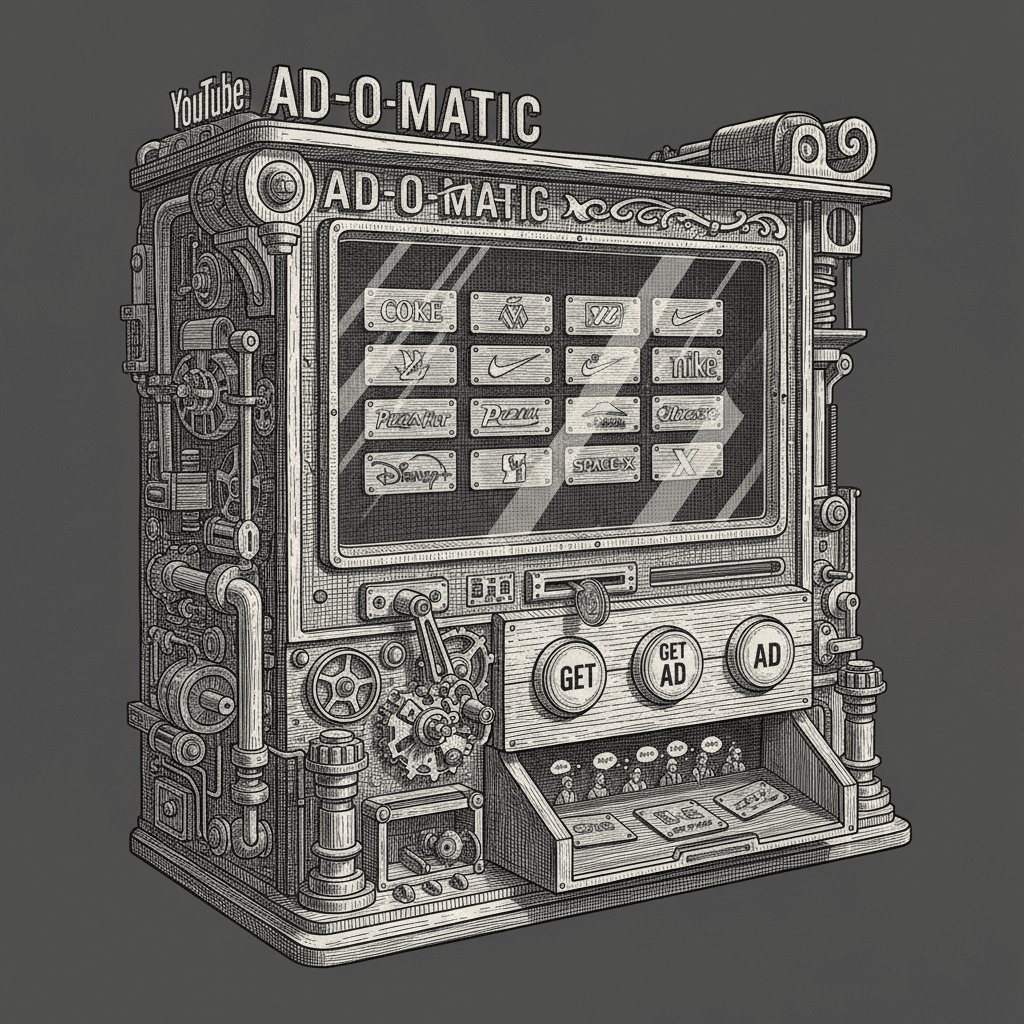
There's a certain irony in watching YouTube, the platform that launched a thousand careers with the promise of "Broadcast Yourself," slowly morph into "Broadcast Yourself After These 60 Seconds of Unskippable Ads)." The enshittification of our favourite platforms isn't a betrayal. It's the business model working exactly as designed.
The Uncomfortable Math
Let's start with the numbers, because they tell a story your gut already knows. YouTube pulled in $36.15 billion in ad revenue in 2024, up from a mere $7 billion in 2017. That's a 400% increase in seven years. In Q4 2024 alone, they cracked $10.47 billion for the first time, smashing Wall Street's estimates.
Meanwhile, the ad load has gone from a polite 2-3 ads per video in 2020 to a relentless 5-7 ads per video in 2025, including those soul-crushing 30-second un skippable spots they now serve on connected TVs. YouTube isn't hiding from this. They'll tell you straight: 79% of viewers prefer one long ad break over multiple interruptions. So they're doing you a favour, apparently. Bless them.
Here's the thing: YouTube Premium hit 125 million subscribers globally in March 2025, up from 18 million in 2019. That's explosive growth, yes. But it's still roughly 4-5% of YouTube's 2+ billion logged-in users. The other 95%? They're the product.
Cory Doctorow Was Right (Unfortunately)
The sci-fi writer and tech activist Cory Doctorow coined the term "enshittification" back in 2022 to describe the three-act tragedy of platform capitalism.
Act One: The platform is brilliant. It gives users genuine value, often at a loss, to build a base. Think early YouTube: no ads, unlimited uploads, the wild west of cat videos and guitar tutorials.
Act Two: The platform abuses users to benefit business customers (advertisers). Your feed fills with sponsored content. Unskippable ads breed like rabbits. The algorithm starts optimising for engagement, not enjoyment.
Act Three: The platform abuses the business customers too, extracting maximum value for shareholders. CPMs (what advertisers pay per thousand views) rose 18% since 2023, while click-through rates dropped 9%. Everyone's getting squeezed.
Then the platform dies. Or limps on, a hollow shell of its former self.
Google's parent company Alphabet once had an informal motto: "Don't be evil." They quietly scrubbed most mentions of it from their code of conduct in 2018. The timing was impeccable.
The Premium Paradox
I'll admit something embarrassing: I pay for YouTube Premium. Have done for years. And every time I watch a friend's screen filled with double pre-roll ads and mid-roll interruptions, I feel a mix of guilt and smug superiority. The guilt wins.
Because here's the thing about these premium tiers: they're designed to make the free experience so aggravating that you capitulate. Spotify mastered this, achieving a 40-45% conversion rate from free to paid, when the industry average hovers around 2-5%. Their secret? Make the free version functional but consistently irritating. Ads every few songs. No offline listening. Shuffle-only on mobile.
YouTube's taking notes. Premium Lite, their new £7.99/month tier in the US, removes ads from videos but keeps them on Shorts and music. It's the nicotine patch of ad avoidance. Not quite the full hit, but enough to hook you.
Netflix, once the poster child for ad-free streaming, now has 94 million monthly active users on its ad-supported tier, more than double the 40 million from May 2024. And 42% of all Netflix subscribers now choose the ad tier, up from 14% in 2023. The streaming wars have become a race to the bottom, and we're all sitting in the cheap seats.
The Real Cost of Free
Here's what we don't talk about enough: when a service is free, you're paying in attention, data, and psychological real estate. The average Brit now spends nearly £500 a year on subscription services. But the average American consumer manages 12 active subscriptions. We've traded one form of payment for another, and now we're juggling both.
Subscription fatigue is real. 35% of streaming users plan to cancel at least one service in the next year. Meanwhile, 47% of users now deploy ad blockers, up from 27% in 2020. YouTube's response? Server-side ad insertion that stitches ads directly into the video stream, making them nearly impossible to block. The arms race continues.
The Contrarian Take
Here's what everyone knows but won't say: the free internet was always a Ponzi scheme with better marketing. Someone has to pay for the servers, the engineers, the content moderation teams. For two decades, that someone was advertisers, and the currency was our attention. Now the bill's come due.
But the solution isn't to romanticise the past. Early YouTube wasn't sustainable. Neither was ad-free Netflix burning through cash to acquire subscribers. The question isn't whether platforms should monetise. It's whether the current model serves anyone except shareholders.
Creators take a 55% revenue share from YouTube ads. Sounds generous until you learn that blocked views, Premium subscribers, and low-CPM markets can crater actual earnings. Many creators now make more from sponsorships and memberships than AdSense. The platform has become the middleman charging rent on attention you cultivated.
A Smarter Way to Think About It
Stop thinking of these platforms as services. They're attention exchanges, and you're a commodity trading on them. Once you internalise that, the decisions get clearer.
Pay for what genuinely improves your life. Block what you can. Diversify your information diet across platforms so no single company owns your attention entirely. And for the love of everything, audit your subscriptions quarterly. That gym membership you forgot about? Same energy as the streaming services rotting in your app drawer.
The platforms will keep enshittifying. That's baked into the model. Your job is to stop being surprised by it and start being strategic about what you actually value.